
Carbon-Filled PTFE Valve Seat — why this filler for this component
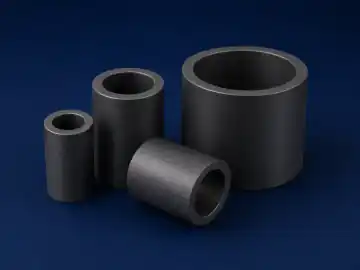
Carbon-filled seats are specified where the valve passes hot water or steam. That duty defeats unfilled PTFE, which softens and takes a permanent set, and it corrodes a bronze-filled seat — carbon holds up in both respects.
Where Carbon-Filled PTFE Valve Seat is used
Against a glass-filled seat
carbon is the better choice in hot water and steam, and adds static dissipation. Glass-filled retains broader chemical resistance across cold aggressive media, so for general chemical process valves glass remains the default.
Seat leakage rises with accumulated thermal cycles as well as mechanical ones. On steam service, cycle count and hours at temperature together are a better replacement trigger than either alone.
Key properties
Compound
Carbon-filled PTFE, typically 25% carbon
Duty
hot water, steam and condensate valves; static-sensitive lines
How it behaves here
Carbon raises the temperature at which the seat still recovers between closures, and conducts heat away from the seating band rather than letting it concentrate. The conductivity also dissipates static, which matters on valves handling dry powders or non-conductive solvents.
Where it does not belong
Strong oxidising media attack the carbon. The seat is also dark and will mark light product, so it does not belong in food, dairy or cosmetic service.
Specifications
| Property | Value |
|---|---|
| Compound | Carbon-filled PTFE, typically 25% carbon |
| Duty | Hot water, steam and condensate valve service |
| Form supplied | Machined to valve drawing |
| Governing factor | Recovery between closures at elevated temperature |
| Note | Higher seating torque than an unfilled seat |
| Not suitable for | Strong oxidisers; food and light-product contact |
Manufacturing process
Compression moulded from 25% carbon compound, sintered, then machined to the valve drawing.
Material selection notes
Carbon raises the temperature at which the seat still recovers between closures, and conducts heat away from the seating band rather than letting it concentrate. The conductivity also dissipates static, which matters on valves handling dry powders or non-conductive solvents.
How to specify your order
Against a glass-filled seat: carbon is the better choice in hot water and steam, and adds static dissipation. Glass-filled retains broader chemical resistance across cold aggressive media, so for general chemical process valves glass remains the default.
Quality checks and inspection
Dimensions are verified on CMM against your drawing. Filler content and sintered density are checked per ASTM D792, with tensile and elongation per ASTM D4894. A mill test certificate stating the lot, filler content and measured values ships with the order.
Ordering and export documentation
Confirm actuator torque after fitting. A filled seat closes harder than an unfilled one, and in hot service the seat will also be softer at temperature than it feels on the bench.
Export packing and lead time
HEMSUN is a DGFT IEC registered exporter (Government of India). Commercial invoice, packing list and certificate of origin accompany international despatch.
Storage and handling
Seat leakage rises with accumulated thermal cycles as well as mechanical ones. On steam service, cycle count and hours at temperature together are a better replacement trigger than either alone.
Compliance & Standards
HEMSUN is a DGFT IEC registered exporter (Government of India). Filler content and sintered density are verified per ASTM D792 on each batch, with tensile and elongation checked per ASTM D4894.
Frequently Asked Questions
What Carbon-Filled PTFE Valve Seat options does HEMSUN manufacture?
Carbon-filled seats are specified where the valve passes hot water or steam. That duty defeats unfilled PTFE, which softens and takes a permanent set, and it corrodes a bronze-filled seat — carbon holds up in both respe…
Can you supply Carbon-Filled PTFE Valve Seat for OEM and export orders?
Yes. We support prototype lots, recurring OEM programmes, and export packing with material certificates and dimensional inspection reports on request. Typical RFQ response is within one business day when drawings are complete.
How do I request a quote for Carbon-Filled PTFE Valve Seat?
Send material grade, dimensions or drawing, quantity, application media, and operating temperature/pressure via https://hemsun.com/contact. Our engineering team confirms manufacturability, lead time, and pricing.