

Carbon-Filled PTFE Piston Ring — why this filler for this component
An oil-free compressor ring has no lubricant at all — it runs on a transfer film it lays down on the cylinder wall itself. Carbon filling is specified because it builds that film reliably while carrying the load and conducting the heat that dry running generates.
Where Carbon-Filled PTFE Piston Ring is used
Against a graphite-filled ring
carbon carries more load and sheds more heat, so it suits higher pressures and duty cycles. Graphite runs at lower friction against a soft or plated bore and is the safer choice where the cylinder wall is not hardened steel.
Rising blow-by is the practical end-of-life signal, and it usually appears before dimensional wear is obvious on the ring itself. Track discharge performance rather than waiting for a strip-down.
Key properties
Compound
Carbon-Filled PTFE, typically 25% carbon
How it works here
Carbon raises compressive strength so the ring holds its section against gas pressure, and its thermal conductivity moves heat from the ring face into the bore rather than letting it concentrate in the polymer. Carbon-filled compounds also perform well in water and steam service, which suits wet-running compressors.
Where it does not belong
The compound is less chemically inert than unfilled PTFE and is attacked by strong oxidising media. Carbon filling also makes the ring electrically conductive, which is usually irrelevant in a compressor but occasionally matters.
Specifications
| Property | Value |
|---|---|
| Compound | Carbon-filled PTFE, typically 25% carbon |
| Duty | Dry running, oil-free compression; suits water and steam service |
| Form supplied | Machined to cylinder drawing |
| Governing factor | Transfer film formation and ring gap at temperature |
| Counterface | Bore finish per compressor specification |
| Not suitable for | Strong oxidising media |
Manufacturing process
Compression moulded from 25% carbon compound, sintered, then machined to your drawing. Filled compounds need higher compaction pressure than unfilled PTFE to reach full density through the section.
Material selection notes
Carbon raises compressive strength so the ring holds its section against gas pressure, and its thermal conductivity moves heat from the ring face into the bore rather than letting it concentrate in the polymer. Carbon-filled compounds also perform well in water and steam service, which suits wet-running compressors.
How to specify your order
Against a graphite-filled ring: carbon carries more load and sheds more heat, so it suits higher pressures and duty cycles. Graphite runs at lower friction against a soft or plated bore and is the safer choice where the cylinder wall is not hardened steel.
Quality checks and inspection
Dimensions are verified on CMM against your drawing. Filler content and sintered density are checked per ASTM D792, with tensile and elongation per ASTM D4894. A mill test certificate stating the lot, filler content and measured values ships with the order.
Ordering and export documentation
Set the ring gap for running temperature, not cold assembly. Filled PTFE expands substantially, and a gap closed up at temperature will seize the ring in the bore. Bore finish governs how quickly a stable transfer film forms — too smooth and the film cannot key, too rough and it is abraded away.
Export packing and lead time
HEMSUN is a DGFT IEC registered exporter (Government of India). Commercial invoice, packing list and certificate of origin accompany international despatch.
Storage and handling
Rising blow-by is the practical end-of-life signal, and it usually appears before dimensional wear is obvious on the ring itself. Track discharge performance rather than waiting for a strip-down.
Compliance & Standards
HEMSUN is a DGFT IEC registered exporter (Government of India). Filler content and sintered density are verified per ASTM D792 on each batch, with tensile and elongation checked per ASTM D4894.
Frequently Asked Questions
What Carbon-Filled PTFE Piston Ring options does HEMSUN manufacture?
An oil-free compressor ring has no lubricant at all — it runs on a transfer film it lays down on the cylinder wall itself. Carbon filling is specified because it builds that film reliably while carrying the load and con…
Can you supply Carbon-Filled PTFE Piston Ring for OEM and export orders?
Yes. We support prototype lots, recurring OEM programmes, and export packing with material certificates and dimensional inspection reports on request. Typical RFQ response is within one business day when drawings are complete.
How do I request a quote for Carbon-Filled PTFE Piston Ring?
Send material grade, dimensions or drawing, quantity, application media, and operating temperature/pressure via https://hemsun.com/contact. Our engineering team confirms manufacturability, lead time, and pricing.
Related Machinery, Tooling & Technical Guides
Manufacturing Presses
Engineering Process Guides
Related Products
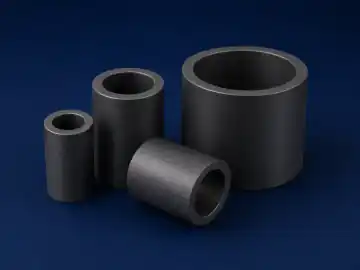
Carbon Filled PTFE
View DetailsPTFE Piston Ring
View Details